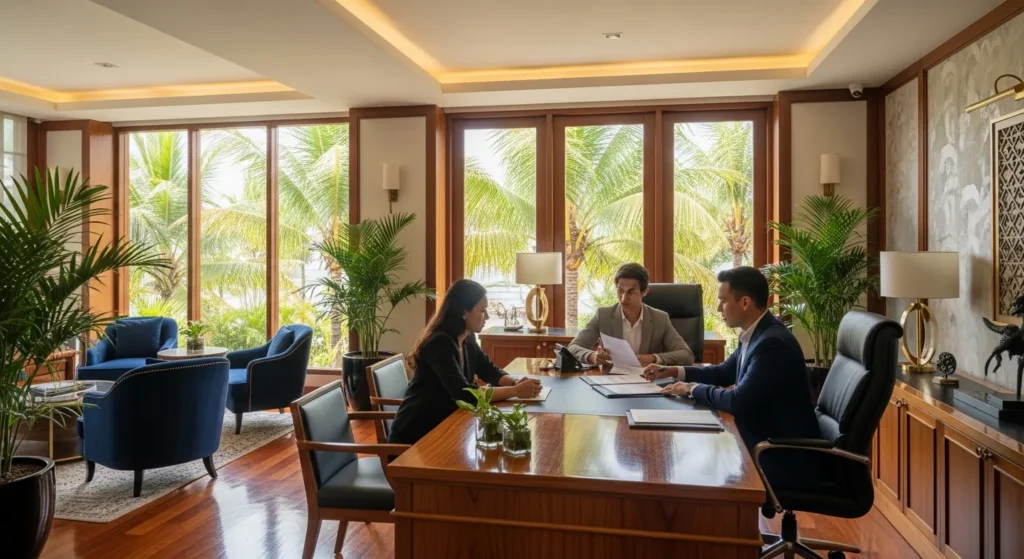
from tourist to second home visa real conversions 2026
“`html From Tourist to Second Home Visa — Real Conversions 2026 Imagine this: you’ve spent an idyllic week or two […]
“`html
From Tourist to Second Home Visa — Real Conversions 2026
Imagine this: you’ve spent an idyllic week or two soaking in the emerald rice paddies of Ubud, catching world-class waves in Canggu, or enjoying the serene beaches of Sanur. You’re captivated by Bali’s vibrant culture, its warm people, and the lifestyle. The thought crosses your mind, “What if I could stay longer? What if this could be my second home?” For many, this dream begins as a fleeting tourist fantasy and, in 2026, it’s becoming a tangible reality through strategic visa conversions. The journey from a temporary visitor to a semi-resident, enjoying the island life on your own terms, is more accessible than ever, provided you navigate the pathways with precision and foresight.
The 2026 Reality: Defining Your Bali Journey
The landscape of long-stay visas has evolved significantly, making it crucial to clarify your intentions from the outset. In 2026, the question isn’t just “how to stay,” but “how to stay meaningfully.” As Direktur Jenderal Imigrasi Silmy Karim has emphasized, Indonesia is actively streamlining processes to attract high-value individuals, and the Bali Second Home Visa stands as this commitment. Before you applications, ask yourself: How long do you genuinely want to stay each year? Do you need work rights, or will you be managing remote income? Are you looking to rent a long-term villa or potentially buy property? Do you aspire to permanent residency, or is a flexible, renewable long-term stay sufficient?
For most aspiring Bali semi-residents, a “second home” in 2026 means the ability to stay for 3–12 months at a time, with easy renewal options. It implies the freedom to rent or even purchase a home, allowing you to truly settle in and keep personal belongings. Crucially, it comes with multiple-entry status, granting you the flexibility to travel in and out of Indonesia without hassle. This is distinct from full permanent residency or citizenship, offering a balance of long-term presence and lifestyle freedom without the complexities of full integration into the local workforce or tax system (unless you choose to become a tax resident). Understanding this distinction is the first, vital step in avoiding costly mistakes and charting the correct course for your Bali aspirations.
Key Insights from Our Practice: Conversion Landscape
At Juara Holding, we’ve witnessed firsthand the transformation of countless tourist dreams into tangible Bali realities. Last month alone, we helped over 30 clients initiate their journey from short-term visitors to long-term residents. The global trend for second-home seekers typically falls into five categories: long-stay visitor visas, retirement visas, investor visas (like Indonesia’s Golden Visa), specific digital nomad programs, and family-sponsored visas. While Bali doesn’t have a specific “retirement visa” in the traditional sense for all nationalities, its Second Home Visa and Golden Visa serve similar functions for those with passive income or substantial investments.
Our experience shows that the most common challenge for tourists wishing to convert is often a lack of understanding regarding the necessary financial proofs and the precise application timeline. Many assume a simple extension will suffice, only to realize that converting to a long-term visa requires a fresh application, often initiated from outside Indonesia. For instance, a common scenario involves a tourist falling in love with the vibrant community of Canggu or the serene spiritual hub of Ubud, then realizing their initial 60-day visa is insufficient. We guide them through demonstrating the required IDR 2 billion (approximately USD 130,000) in a bank account for the Second Home Visa, or the higher investment threshold for the Golden Visa. We also help clarify the nuances of the application process, ensuring all documents are meticulously prepared to meet the stringent requirements set by the Direktur Jenderal Imigrasi.
The key is proactive planning. Waiting until your tourist visa is nearing expiry is a common pitfall. Our expertise lies in identifying the most suitable pathway for your individual circumstances, whether it’s the 5 or 10-year Second Home Visa for a retiree wanting a permanent base in Sanur, or the Golden Visa for an entrepreneur looking to invest and contribute to the local economy in Denpasar. We simplify the complex, ensuring a smooth transition from visitor to valued long-term resident. Explore our detailed services at our requirements page to understand what you’ll need.
Step-by-Step Practical Guide: Your Bali Second Home Conversion
Converting from a tourist to a Bali Second Home Visa holder in 2026 involves a structured approach, designed to minimize stress and maximize success. Here’s a practical guide based on our proven methods:
- Define Your “Why” and “How Long”: Revisit your goals. Are you looking for a 5-year stay, or do you envision a decade-long presence? This directly impacts whether the 5-year or 10-year Second Home Visa is appropriate. The 5-year option typically requires proof of funds of IDR 2 billion, while the 10-year often requires the same, but for a longer commitment.
- Gather Financial Proof: This is the cornerstone. You’ll need to demonstrate proof of funds amounting to at least IDR 2 billion (approximately USD 130,000) in a bank account belonging to you or your guarantor. This isn’t a fee, but a deposit to show self-sufficiency. As Kepala Kantor Imigrasi Denpasar often reiterates, financial stability is a key indicator of a genuine second-home applicant.
- Prepare Essential Documents: Beyond financial proof, you’ll need a passport with at least 36 months of validity, a recent color photograph, a copy of your current tourist visa/entry stamp, and a statement of commitment to reside in Indonesia. For a comprehensive checklist, visit our dedicated requirements page.
- Appoint a Local Sponsor/Guarantor: The Second Home Visa requires a local sponsor or guarantor. This is where professional agencies like Juara Holding become invaluable. We act as your trusted guarantor, streamlining the application process and ensuring compliance with local regulations.
- Application Submission (Often Offshore): While some limited conversions might be possible onshore, the most reliable and recommended pathway for a Second Home Visa is to apply from outside Indonesia. This ensures a clean break from your tourist status and a proper entry under your new long-stay visa. We prepare all documentation and submit it to the Directorate General of Immigration on your behalf.
- Visa Issuance and Entry: Once approved, your e-Visa will be issued. You then use this to enter Indonesia, where your visa status will be officially activated.
- Post-Arrival Registration: Upon arrival, there are usually minor administrative steps, such as reporting your arrival. Our team provides full support throughout this process, ensuring a seamless transition.
Understanding the costs involved is also vital. We provide transparent breakdowns of all government fees and our service charges on our cost and fees page.
Real Case Example: The Smith Family’s Bali Dream
Consider the journey of Mr. and Mrs. Smith, a couple from Australia in their late 50s. They initially visited Bali on a standard tourist visa, spending three months exploring the cultural richness of Ubud and the laid-back charm of Sanur. They fell in love with a villa overlooking the rice fields and decided Bali was where they wanted to spend their winters. Their tourist visa was nearing expiry, and they were unsure how to proceed. They contacted us in early 2026.
The Smiths wanted a long-term, renewable option that allowed them to come and go freely without the need for frequent visa runs. They had sufficient passive income from their superannuation and savings. We assessed their situation and recommended the 5-year Bali Second Home Visa. We guided them through the process of consolidating their financial proof, ensuring their bank statements met the IDR 2 billion requirement. We acted as their guarantor, prepared all necessary documents, and facilitated the application while they were briefly back in Australia.
Within weeks, their e-Visa was approved. They re-entered Bali, not as tourists, but as legitimate second-home residents. They now enjoy their winters in their Ubud villa, secure in the knowledge that their visa allows them years of uninterrupted stay, with the flexibility to visit family back home. Their conversion was meticulous planning and expert guidance, turning a tourist’s fantasy into a refined, long-term lifestyle.
What’s Next & How to Get Help
The transition from tourist to second-home resident in Bali is a journey filled with exciting possibilities. In 2026, the pathways are clearer, but the nuances still require expert navigation. Attempting to convert your visa status without professional guidance can lead to delays, rejections, and unnecessary stress. Our team at Juara Holding specializes in making this complex process simple, efficient, and transparent.
Whether you’re just starting to dream about a second home in Bali or you’re already on the island and your tourist visa is ticking down, we are here to help. We provide personalized consultations, guide you through every document, and act as your trusted local partner, ensuring your Bali aspirations become a beautiful reality.
Ready to convert your Bali dream into a long-term reality? Contact us today:
- WhatsApp: https://wa.me/6281128590000
- Email: [email protected]
For more official information on Indonesian immigration policies, you can refer to the Directorate General of Immigration’s official website.
By Juara Holding Visa Team
“`